• RSS
  • Delicious
  • Digg
  • Facebook
  • Twitter
  • Linkedin
  • Green Idea 1 : ' Find your nearest Farmer's Market and go there this weekend with friends...
  • Green Idea 2 : ' Swap your old incandescent bulbs for CFLs when they burn out and start saving $$$
  • Green Idea 3 : ' Try using your bike this weekend instead of your car...
  • Green Idea 4 : ' This Spring why not plant a small kitchen garden of tomatoes and peppers on your balcony or patio?
  • Green Idea 5 : ' What are you waiting for? Make the change today!
  • SUSTAINABLE DESIGN

    The basic objectives of sustainability are to reduce consumption of non-renewable resources, minimize waste, and create healthy, productive environments.

  • URBAN GARDENING

    You can grow your own food whether you live on a rural farm or in a tiny urban apartment. Urban gardening is all about using space wisely to regain a closer connection with your food and beautify your home or neighborhood.

  • RENEWABLE ENERGY

    Explore energy resources, such as wind, solar, hydroelectric, biomass, geothermal, ocean thermal, and wave power, that replenish themselves within a short period.

  • LOCAL FARMERS MARKETS

    Locating the Farmers' Market nearest to you is now only a few clicks away. Localharvest.org is a useful and straight-forward site designed to faciliate your quest.

Thursday

Byron Bay's Utility Box Art: Russell and Callie

Posted by vergelimbo On 1:53 AM


Wandering around the beachside town of Byron Bay, New South Wales, you won't spot any of those eyesores of modern electrical convenience known as "utility boxes". Instead, those banal and industrial-looking urban warts have been given a makeover by two Lismore-based artists, Russell and Callie.  Their artistic boxes blend thematically into their environment, highlighting nearby subjects of interest and emphasizing the surfside imagery of Byron Bay. Art and Utility in Byron Bay!

HERE ARE JUST A FEW THAT I HAVE FOUND SO FAR:


So what is the difference between Graffiti and Street Art? When pressed, most people would seem comfortable with the distinction being made along the lines of artistic skill or technique. But such criteria can be quite subjective, and easily lead to a blurring of graffiti and street art in many cases. In Australia, the legal distinction between the two artforms is made simply on the basis of permission. Graffiti is defined under the law as "the marking of another person's property without permission". Graffiti is illegal throughout Australia. Street Art, such as the examples in the slideshow above, meet the crieria of "artistic work done with the permission of the person who owns the wall (or object) that the work is being done on, and the permission of the local council". As an example of this criteria, it can be said that the street art rendering of the Volkswagen van (top image) has thus been tagged illegally with graffiti! Ironically, the graffiti (in red) is sprayed directly above "Keep Byron Clean". Don't you just love irony?

What do you think? Have you seen anything like this in your neighbourhood?

Tuesday

Bike vs. Car Sales Graph

Posted by vergelimbo On 10:17 AM

Finally a trend I can get behind. Forget those tragically hip Williamsburg Wannabes and their brakeless single-speeds. All around the world bike manufacturing numbers are leaving their automotive counterparts in the dust, and that's great news for cyclists. More cyclists on the road is already leading to an increasing number of bike lanes, and increased safety through driver awareness. Wear a helmet, and use a light at night.

From The Economist:
THESE are tough times for carmakers, many of which are labouring under high oil prices, slowing demand and financial weakness. For makers of human-powered, two-wheeled vehicles, by contrast, business is booming. Giant Manufacturing, the world’s largest bicycle-maker, sold a record 460,000 units last month and is heading for its best year ever. Such is the demand for bikes that shortages were reported in New York earlier this year. In Taiwan, Giant’s home market, supply is tighter still: for many models, buyers put down deposits months before their bikes come off the assembly line.

Please leave your comments or queries below:

Sunday

Review: "Plan Bee", by Susan Brackney.

Posted by vergelimbo On 10:31 AM

"Now disappearing in alarming numbers, honeybees are the unsung heroes of the food chain, essential for the pollination of apples, oranges, almonds, blueberries, and more than ninety other crops."
Find more info@ planbeebook.com

One of the long-term projects I have had on my "to do" list for the Urban Garden Project over the last few years has been to keep a few hives of bees. My friend Steve G, also an aspiring beekeeper, has been a member of the Forsyth Beekeepers' Association for some time and has encouraged me in this direction. Beekeeping has always appealed to me, and thousands of determined pollinators would benefit my garden's yield dramatically. Oh yeah...and there is the honey. Local honey, apart from tasting yummy, offers immunity to many seasonal allergy symptoms. However, my design/build work [ie: my real job] has taken off, leaving me no time to pursue my own "Plan Bee" this season. Nonetheless, I have (bee)n able to research many of the practical issues of beekeeping and that is how I came across Susan Brackney's "Plan Bee". Aptly subtitled "Everything you ever wanted to know about the hardest working creatures on the planet", Plan Bee is destined to become a cult classic.

My friend Andrea had just finished reading "Plan Bee" and was intending to sell it to a local used-book store when I stepped in. The moment I saw the dust cover and skimmed through its 192 pages I was "stung" with interest. As a designer, I very much appreciate the concept and layout of the book itself... someone with a skilled eye and subtle creativity has done very good work - from the cover art to the binding, the paper used, the fonts chosen, the page layout, the varied photographs and sketches within, through to the back-cover blurbs.

Brackney divides the book into two parts: "The Buzz about Bees" and "A Beekeeper's Life", for a total of 9 chapters with multiple sections therein. Chapter titles include such puns as: "Who's Who in the Hive", "The Bee's Knees" and "The Sweet Life". Humorous anecdotes abound. But so too does a wealth of interesting scientific, cultural, historical, environmental and practical information. This is not a textbook on beekeeping... but it will stimulate the enthusiast into pursuing more reading about bees and beekeeping, or at the very least (for the casual reader) it will draw attention to the largely unrecognized importance of bees in our world. Multiple footnotes anchor the pages - some anecdotal, some academic, but all interesting, useful and often funny. Two pages of "Further Reading and Resources" finish the book.

The writing is colloquial, accessible, concise and very entertaining. It is really quite a feat that Plan Bee contains such a range information: from beekeeping rituals in ancient Egypt to the early American beekeeping practices, to the current blight of the Varroa mite and up-to-date research on the looming and mysterious threat of Colony Collapse Disorder [CCD]. This book is one of the better "How To" books I have ever read... what it lacks in practical matters it more than makes up for in its inspiring tone, clear message and provocative futurism. Anyone could read "Plan Bee" and everyone will enjoy it. I already have 3 friends looking forward to borrowing my copy. I am hoping that they will give into their stinging desires to read "Plan Bee" and buy their own copies. An author this good deserves to be rewarded. I'll be buying another copy to give to a friend for his birthday.

Monday

Best Green Blogs awards "Editor's Choice 2009" to Vergelimbo.com

Posted by vergelimbo On 10:16 AM

"Best Green Blogs is the web’s largest directory of green and sustainable themed weblogs. Writers from all over the world are publishing articles and stories dealing with a wide variety of topics dealing with environmental issues and green living; and Best Green Blogs is an attempt to capture some of that independent publishing spirit." -Timothy Latz, Editor.

Blogs selected for The "Editor's Choice" were chosen for the quality of content, design and information provided. They stand out in some way, whether in the style of writing, topics presented or in overall presentation.


Thanks, Best Green Blogs! It's nice to get some "official" recognition for my blog. As many bloggers come to realize, it takes a long time to develop an audience, and you often feel that you are tossing your words and ideas into the indifferent ether. Reader's comments are always a thrill, especially when they are positive and encouraging, but in the almost 6 years that I have been blogging, I have noticed a declining number of comments per article, despite an increasing number readers per article. This parodox would seem to suggest a less interactive reader. By using a free "sitemeter" I can count my readers, tell where they are from geographically, and how they end up reading my blog. "Google searches" for such terms as urban gardening, growing red peppers, seed strips, organic garden, bicycle sales vs cars sales, green drinks, and wheatgrass are among my most popular.

Screen shot of recent visitors to vergelimbo by location:


Using a sitemeter can provide bloggers with reams of interesting, if not useful, information about their readers: How long did they read your blog for, how many articles, where did they "outclick", what browser was used, what operating system was used, etc.

Check out Best Green Blogs for more new suggestions and reviews of green-themed blogs and remember to bookmark those that catch your interest and leave a comment.

Thursday

MUTO: Urban Graffiti Animation by BLU

Posted by vergelimbo On 11:23 AM

"Muto" by Italian artist BLU is almost impossible to describe. I know this because I have tried several times, and ultimately throw my hands up in the air, and say: "Just watch it...you'll see"

It is dynamic, urban, animated, morphing, topological graffiti:


Blu has an online "scrapbook" which you can browse through like a book, flipping pages, and clicking on the links to see more videos, photos and links to related work.

Wednesday

Fall Slideshow: Urban Garden Project

Posted by vergelimbo On 6:30 PM


2009 was The Year of Rain at The Urban Garden Project. Whereas last year I needed to water the garden to stave off the flaccid, victorian death scenes my plants staged for me on a daily basis, in 2009, my garden was upright, lush and green - with little or no watering. Ironically, Tim and I began work on a rain collection system, with drip hoses and twin 40 gallon tanks. The rain catcher system is currently sitting in parts in the corner of my shop. I have just finished another big design/build project for Dewey's Bakery and Cafe, so I might have some free time to piece my rain catcher together so that it is up and "catching" for Spring.

The Fall/Winter plants are in, and the peppers, eggplant, and mixed lettuce are still going strong. It is November 4th, and 60 degrees. I am about to harvest some Bok Choy and Peppers, so I went looking for a Bok Choy soup recipe and found this:

BOK CHOY IN COCONUT MILK
Prep time: 10 min | Cooking time: 15 min | Serves: 2

1 big bunch bok choy, leaves and stems roughly chopped
1 small onion, sliced
1 tsp garlic, minced
1 tbsp Sambal Olek/red chilli paste
2 cups coconut milk
salt, to taste

ADD onions, bok choy stems, garlic and chilli paste to coconut milk in a deep pan, and let it come to a boil over medium-heat. Stir ocassionally to allow garlic and chilli paste to blend well with the coconut milk.

ADD bok choy leaves, season with salt, and turn off the heat. Cover the pan and let it sit for a few minutes till the leaves begin to wilt.

Recipe Hookup: hookedonheat.com


This simple soup looks so delicious! Do you have any favorite soup recipes to share? Leave me a comment or recipe by clicking on comments below:

Thursday

Urban Garden Project: September 16th Slideshow

Posted by vergelimbo On 9:57 PM


Phew! Last Friday I finished my big design/build project for Dewey's Cafe and Bakery, and they will be opening to the hungry public Monday. The long hours and working on the weekends is over - for the moment. I have taken a small "breather" and am focused on planting the fall crops in my Urban Garden Project.

For the last four years, I have been fine-tuning the principles of organic SPIN gardening [Small Plot INtensive] in my expanding garden. Recently, I rotated some crops out, leaving the still-producing peppers, tomatoes, eggplant, beans, broccoli, melons, and okra in place, while inter-planting fall vegetables in the gaps. Spin gardening is specially conceived to maximize the production and variety of seasonal crops to ensure year round production of the gardener's favorite-or most valuable produce. My garden is roughly 1500 square feet divided into 10 raised beds, and produces more than sufficient vegetables and fruit for me and my friends. I sell any surplus at the local farmers' markets. Lately there has been a lot of surplus...

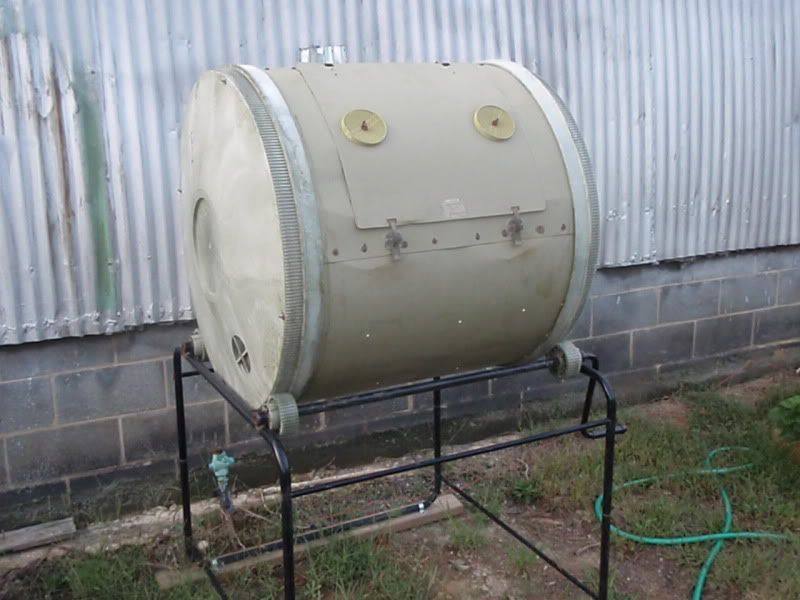
Yesterday I began planting my fall crop which includes: kholrabi, collards, broccoli, onions, beets, kale, squash, carrots, sugar snap peas, spinach, mesclun mix, radishes, chard and garlic. My huge and insatiable composter has devoured the plants I pulled up, as well as the regular "feedings" provided by a network of friends who contribute their compostable material on a regular basis.

Organic composting is an essential element of my spin gardening technique. Continually amending the soil with fresh compost and organic fertilizers such as Plant Tone, Black Kow and organic mushroon compost ensures a healthy, nutrient-rich medium for my plants to grow.

What are you planting? Let me know below:

Wednesday

The Whole Foods boycott

Posted by vergelimbo On 8:34 PM

If one needed another reason to continue boycotting Whole Foods, their CEO, John Mackey has given me one. See the article below for the groundswell...32000 facebook members have decided to stop spending their hard earned money there and I'm pleased to learn that facebook has a use beyond alerting me to birthdays.
I say: F**k Whole Paycheck and their $8 arugula that was monocultured on industrial farms 1500 miles away and shipped in plastic bags. Buy Local Food...or grow your own. It is fresher, cheaper, will stimulate the local economy and build community. Find your nearest farmers' market here: http://localharvest.org


Whole Foods boycott/buycott showdown

Dante Chinni
The Christian Science Monitor: 09.02.2009

There are many commandments in retail, but above them all is one rule: Know thy customer.

If you run Wal-Mart, don’t stock Louis Vuitton – or at least not real Louis Vuitton. If you work at Toys ‘R’ Us, where some shoppers are kids, watch your language. And if you are the CEO of relentlessly progressive Whole Foods, the upscale grocery store that specializes in organic items, don’t come out against the Obama administration’s healthcare proposals.

On Aug. 11, John Mackey, the chairman and CEO of Whole Foods, did just that. In a Wall Street Journal op-ed headlined “The Whole Foods Alternative to ObamaCare,” Mr. Mackey said a number of things that might not sit well with his clientele – perhaps most memorably, “the last thing our country needs is a massive new health-care entitlement that will create hundreds of billions of dollars of new unfunded deficits and move us much closer to a government takeover of our health-care system.”

Mackey later said he was speaking for himself and not for his chain of stores, but the damage had been done. Whole Foods foodies went to the barricades, kind of. Customers pledged to stop shopping at the stores. They urged the TV show “Top Chef” to drop Whole Foods as a sponsor. And in typical 2009 fashion, they expressed their outrage on Facebook, creating a “Boycott Whole Foods” page, which has more than 32,000 members.

Read the full article here

Friday

Spingardens.com at The Urban Garden Project

Posted by vergelimbo On 11:28 PM

So, what is SPIN Gardening?

Small Plot Intensive Gardening is an innovative organic gardening technique designed to promote "small-plot farming" in urban areas by maximizing the yield and variety of seasonal fruits and vegetables. Spin gardeners can consume the fresh seasonal organic produce that they grow, or offer their goods for sale at the nearest Farmers' Market. (Find the nearest location here)


THE UNUSUAL SUSPECTS: Blue Beach Paste, Haley's Pink, Lemon Boy, Mr. Stripey, Cherokee Purple and Golden Girl tomatoes which I sold at a local Farmers' Market today

I have been SPIN gardening for the past 4 years at my Urban Garden Project. I "repurposed" roughly 1500 square feet of an abandoned side-lot adjoining my woodworking shop in Winston-Salem, NC. Divided into 10 raised beds, I grow 7 varieties of heirloom tomatoes, eggplant, 4 types of peppers, beans, zucchini, corn, cucumber, cantaloupe, watermelon, figs, kiwi, blackberries, raspberries, okra, chard, carrots, radish, beets, onions, garlic, salad, kale, sunflowers, basil, cilantro, mint, fennel, rosemary, rhubarb, parsley and a variety of flowering medicinal plants.

FOR MORE INFO LEAVE A COMMENT OR CHECK BACK SOON!

Urban Garden Project Recipe: True Peasant Pesto

Posted by vergelimbo On 9:56 PM

Roughly, To Taste and Texture, Combine:

Basil Leaves - 8 cups of leaves

Olive Oil - 1 half cup
Pine Nuts- 1 half cup
Garlic - 1 full bulb
Parmesan - 1 cup
Mint - 8 sprigs [leaves only]
Parsley - 4 sprigs
Anchovies - 1 small can
Nutmeg - 3 pinches
Balsamic Vinegar 2 Tbsps
Salt and Pepper

In a food processor, combine Olive Oil, Pine Nuts, Garlic, Anchovies
PULSE until coarsely chopped.
Gradually add Basil, Parsley, Mint until mixed [do not puree]
Add Parmesan, Nutmeg, Mint, Salt and Pepper

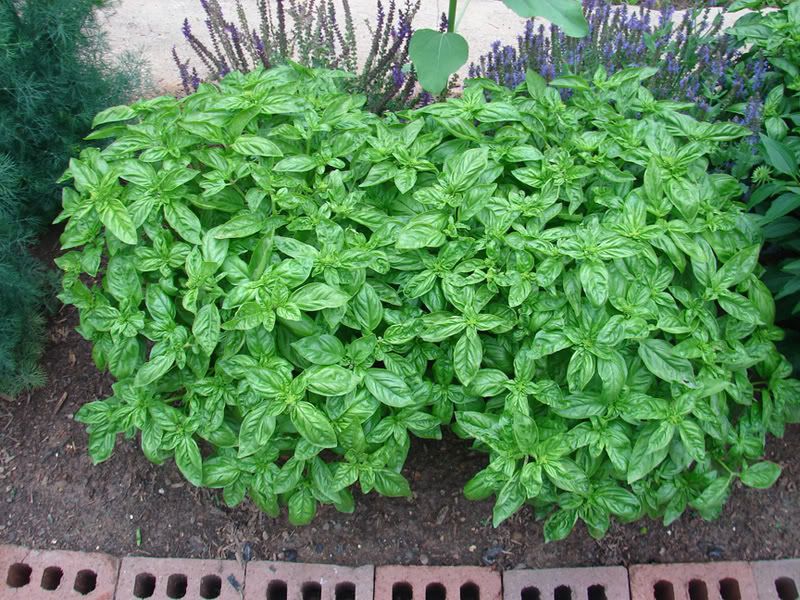
This once-secret recipe for "Urban Peasant Pesto" was passed to me by two men named John. The pesto is worth it's weight in gold. To make the 5.75 pounds of pesto pictured above I picked a well stuffed grocery bag of basil leaves from my Urban Garden Project. They have since grown back and I am almost ready to pick again. [See Photo]

Walnut Variation: Lately the price of Pinenuts (pignolias) has gone through the roof... Walnuts are a tastey and more affordable alternative. I actually prefer the "Walnut Variation". Also in lieu of olive oil try using walnut oil. Your palate will be pleasantly surprised, and your wallet will suffer less.

Share your favorite Garden Recipe or comment by clicking below

The Evolution of Food: From Mother Nature to the Mad Scientist... and back again?

Posted by vergelimbo On 1:52 PM

The history of humankind's relationship with food, both cultivation and consumption, is exceedingly complex and an interesting indicator of societal trends that go well beyond the kitchen table. One phenomenon that has caught our attention recently is the increased promotion of "natural", unadulterated products. This trend is a relatively new, and applauded, break from the recent past.

In the 1950s, mass-produced food came to dominate the American market and resulted in a marked reduction in the nutritional quality of the food that the typical person ate. Food was refined and enhanced and frozen, concepts that imply through the suggestive language of marketing promises of progress and scientific advancement.


Food that had once been local, fresh and seasonal was now being centralised, treated and produced on ever-increasing scales. Nutritional content was lost in the name of convenience, variety and cost-efficiency, impacting taste and dietary norms and expectations.

The next stage in the contemporary development of food can be seen (cynically?) as a superficial profit-driven reaction to consumer demand rather than a real desire for healthier products. The exact same foods that had just had its nutritional content stripped from it by the refining, freezing and other methods associated with mass production was now being enriched and fortified. A further step was added to the ever-lengthening conveyer-belt between the food source and the consumer, which involved artificially reintroducing vitamins and minerals, although in significantly diluted and altered amounts. These modified products are then hawked to the unsuspecting buyer based on the premise of their "superior" nutritional value. The food industry has developed sophisticated marketing strategies with the goal to capitalise on the perception of “progress” and its associated benefits. The American public has been educated to think that “new is improved”, a premise that it also applies to food. How could enriched and fortified wheat bread not be healthier than a loaf untouched by the miracles of science?

Like with almost all relationships, things tend not to remain static and the modern consumer has now entered what could be considered a more enlightened era. Of course, it will take time for this new approach to filter down to the average Joe or Jill, but there is certainly movement in that direction. After decades of tampering and "improving" our food, from the staples through to the luxuries, there is a move back to nature and the natural.

Perhaps it was the nation-wide food scares that brought to light the dangers of mono-farming and how one source can contaminate the food chain of the whole continent (e.g., salmonella from tomatoes, E. coli from spinach, even lethal dog food)? Or maybe it is the speculation that the hormones and anti-biotics in industrially-produced animal and dairy products are affecting the health and development of our children? Whatever the reason, there is a palpable and growing movement towards natural, locally-grown organic food that is becoming increasingly main-stream.

What does this tell us about our relationship with food and, perhaps, with the food industry and its regulators? First, there is an increasingly aware and educated consumer, although one that remains to a large degree at the mercy of the marketing machine (and lobbyists) of the food industry. This problem is compounded by the inconsistency and laxity of the bodies that should be enforcing clarity and nutritional awareness (e.g., FDA, USDA, EPA). Second, for many consumers there is more willingness to sacrifice efficiency, and even cost, in the name of better health and nutrition, although this trend is certainly at its earliest stages (education, education, education).

Finally, as the local and organic movements move out of the ashrams and communes and expand into suburbia and, eventually, to urban centres, there is more acceptance and demand for good, healthy, untreated local food. Not to be forgotten, our collective palates will also thank us for the change back to food as nature intended.


Thursday

Urban Garden Project: July Update

Posted by vergelimbo On 8:11 PM


I took these photos of my Urban Garden project July 15th, 2009. This is the fourth season of the garden, and every year it grows bigger and better. I "repurposed" the lot adjoining my shop with the intention of beautifying the space, promoting urban gardening and ensuring a steady supply of delicious fresh fruit and veggies for me and my friends... "Mission Accomplished"


For Further Information: To Learn the Who, How, Why and Where about The Urban Garden Project check out these articles:

Locavores, Patio Gardens and Urban Gardening
Urban Gardening and the Habits of Locavores
Urban Garden Project: Winston-Salem, NC
Urban Garden Project: Composting in the City
Recession Gardening and the Micro CSA Project

In the beginning: After days of weeding, levelling and removing the gravel of the former driveway June 2006

Friday

Victory Garden Posters

Posted by vergelimbo On 10:39 PM

I love these World War II era Victory Gardens posters.

They represent the ideal convergence of patriotism and artistry. The Work Progress Administration (WPA) hired artists to design these posters to help promote self-sufficiency and co-operative ideals on the home front as a part of the war effort.

Victory Gardens "cropped up" all over the country. At their peak, it is estimated that almost 20,000,000 gardens were growing, and that about 40 percent of all vegetables produced in the U.S. came from Victory Gardens. By the end of the Second World War, the Department of Agriculture estimated total home front production of over one million tons of vegetables valued at 85 million dollars.

Which is your favorite poster? Tell me why below:

Urban Garden Project: June Update

Posted by vergelimbo On 2:20 PM


I should use "stop-action" photography to capture the insane growth occurring at my Urban Garden Project. I took these pics a week ago, and things have grown so much since. "How can this be possible?", you may ask. The simple answer is rain, then lots of sun, and love throughout (ie: weeding, trimming, staking, etc.)

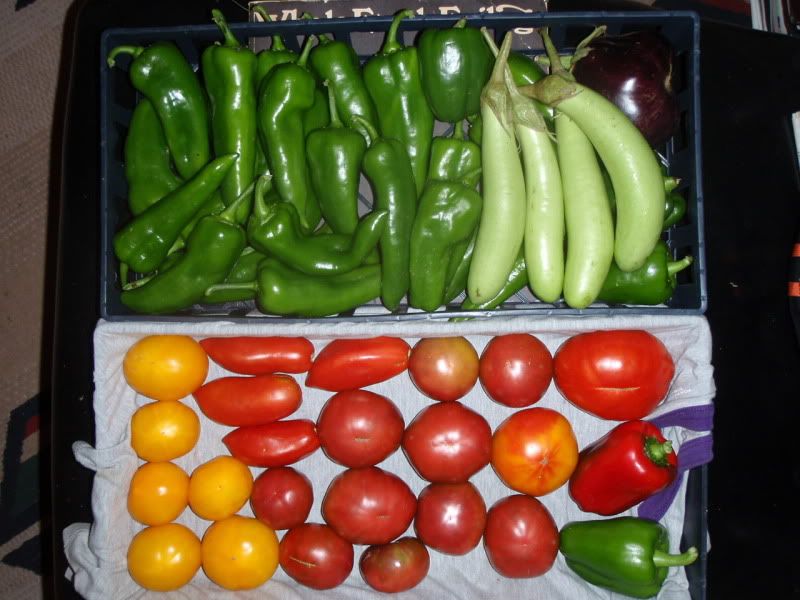
Here are some close-ups of the veggies I have picked recently:


This week I will be training the watermelons down the driveway, mulching most of the garden with straw, and picking some tomatoes, onions, beans, blackberries, salad, and peppers.

Leave me a comment or question and I will get back to you!

Saturday

Urban Garden Project: May Update

Posted by vergelimbo On 1:03 AM


The thundershowers this May have been unprecedented. I have barely needed to water my garden - which was good, because I had a friend visiting from Tel Aviv, and we took a roadtrip to Savannah. I also had an important design/build project with a serious deadline. As a result of this "other-prioritized" schedule, The Urban Garden Project was left in the moist, loving hands of Mother Nature.

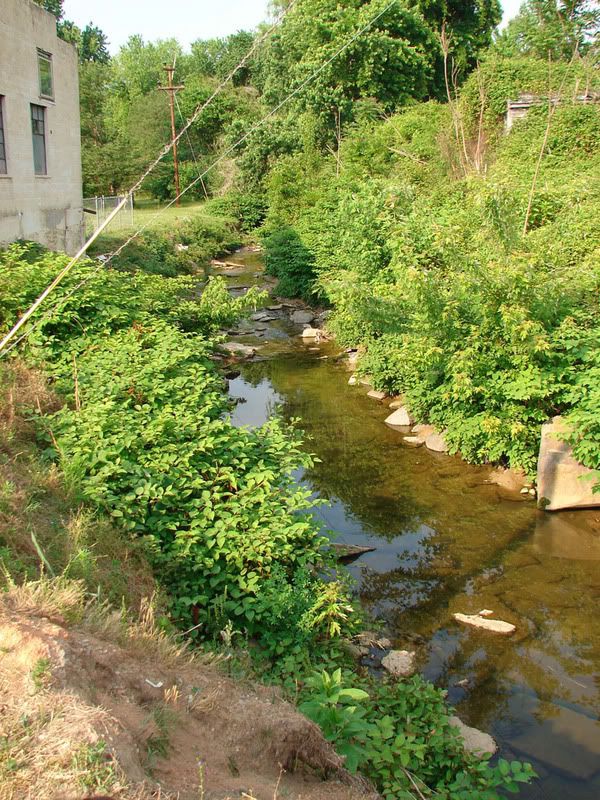
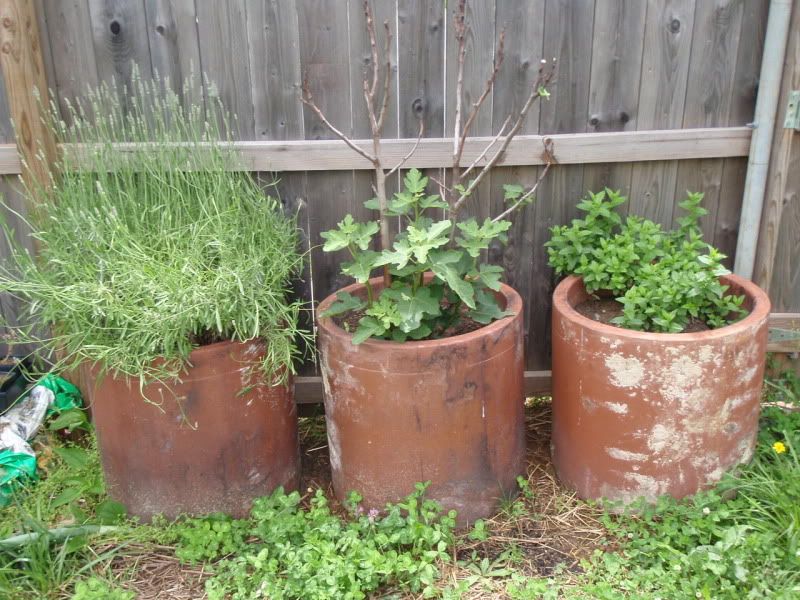
My friends Ed and Hilary helped me plant a row of Blueberries in the new creekside bed, and transplant my fig tree, lavender, and mint in salvaged terracotta tubes from a dismantled furnace. Steve G helped me frame in 5 new raised-beds, and build the trellis for the Isaac Kiwi to ascend.

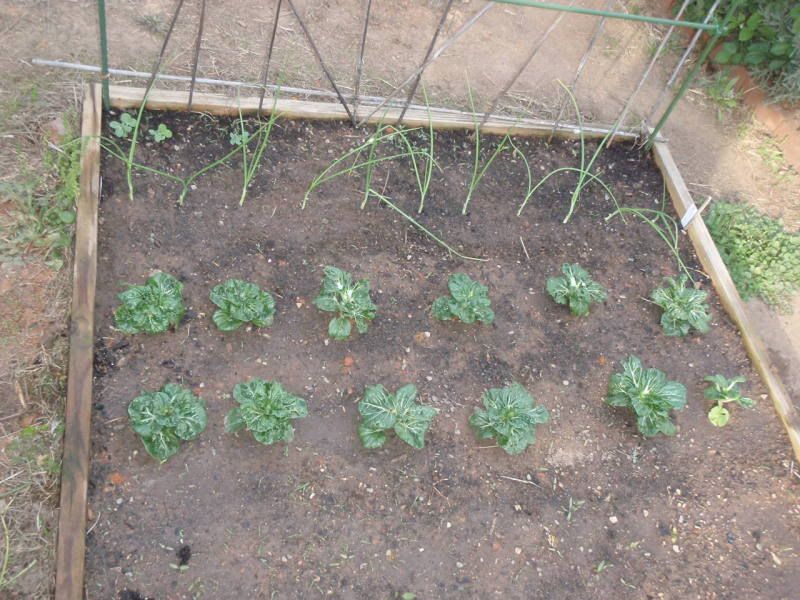
Did I mention the rain? Seemingly non-stop the past few weeks, my garden has reveled in the daily downpours. My heirloom tomatoes have already started to fruit, and my blackberry bushes - now 4 years old - seem intent on breaking some world records. Everything is growing beyond my expectations with the exception of the Baby Bok Choy which was ravaged by bugs unknown, and has been bolting continuously since they were planted - which is quite annoying and inexplicable.

I have been invited to sell my excess tomatoes, peppers, okra, beans, blackberries, basil and eggplant at a "farmers market" to be held Thursdays at the Krankies Airstream on Reynolda Road. I'm quite looking forward to this as The Urban Garden Project produces more than enough fresh veggies for me and all my friends. It also ties in nicely with my Urban Garden Network and Micro CSA idea. I hope all the regular coffee drinkers enjoy what is on offer at the farmer's market, and decide to go home and plant their own Whole Foods Killer Gardens.

Gardening is finally being seen as something cool to do!

Friday

Urban Garden Project: April Update

Posted by vergelimbo On 9:46 PM


The weather has been unseasonably warm these past few days, and I have decided [with fingers crossed] to begin planting in my garden. The five-day forecast calls for highs in the eighties, and lows in the 50's. Freakishly warm for this time of year. The same thing happened last Spring and the results were devastatingly tragic: A few days after I had transplanted my lovingly nurtured heirloom tomatoes, peppers and basil - which I grew at home in peat, the weather took a steep nosedive into the 20's and 30's, and I lost them all. Twenty something seedlings that I had grown from seed from the Seeds of Change catalog met their untimely end. Zapped by unexpected frost, their withered bodies soon became compost in the beds in which I had planted them only a week earlier. I recall they passed, together, on the 4th of May, 2008.

The Moral of the Story:
If you want to get started planting in your garden before May, plant only the hardiest seedlings or seeds. Otherwise you had better be prepared to replace any and all of your much loved home-grown seedlings. Vegetables like onions, peas, broccoli, and cabbage are hardy enough to withstand a gentle frost or two. Almost every other seedling will most certainly perish. In the meanwhile, there is plenty of other gardening work to be done: Amending the soil with mushroom compost or Black Kow manure, weeding, turning over beds, and possibly framing them to make raised beds - as I have just done. [see slideshow above]

The warm weather will soon be here to stay...don't rush into planting as I did last year. "Haste doth make waste"

Sunday

Urban Garden Project: Seeds Strips

Posted by vergelimbo On 4:59 PM

Look closely and you can see the spacing of the seeds...
The latest addition to the ever growing list of "my inventions that other people actually brought to market" are the Ferry-Morse "Jiffy Strips" pictured above. The idea is simple: A strip of biodegradable paper with seeds appropriately spaced that you simply "plant" in an open furrow, and then bury. I tried out the "Nantes" carrots, and the Baby Belle radishes. Small seeds which require specific spacing are ideal for this system: Beets, turnips, leeks, onions, parsnips-essentially, any veggie that is row planted.


Isaac Kiwis Begin their Triffid-like Growth

I finally transplanted the Kiwi that my friend John had given me last year. They were on the verge of taking over my fire-escape garden. These Kiwi are Hillarian climbers, and arbor very nicely providing plenty of shade and a countless number of small, fuzz-less Kiwi that pack all the flavor of the store-bought variety, albeit on a lilliputian scale. I need to build my arbor ASAP.


Verge's improvements to the Jiffy Strips:

Rather than a dyed white tissue strip folded into a 5-inch packet, the strips should be made of a recycled paper/peat infused with organic fertilizer and nutrients. Seed Strips should also come in a roll, like scotch tape to minimize packaging...the current offering is un-necessarily over-packaged.

Friday

Recession Gardening and The Micro CSA Project

Posted by vergelimbo On 5:36 PM

There's money in them there vegetables!

Spring is right around the corner, and many a gardener's green thumb is twitching. I spent a sunny Saturday turning over one of my larger raised beds and uprooting last seasons spindley leafless tomato and pepper plants. I am always careful to shake the heavy-laden roots and capture as much of the soil as possible. The old saw: Waste not, want not fits gardening like glove.

Urban Garden Project Year 3: Oct 2008
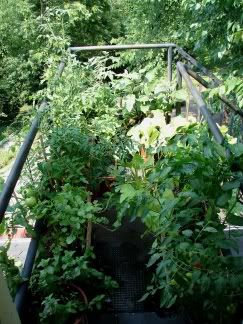
When I started The Urban Garden Project 4 years ago, it was only in part for the financial benefit of growing my own favorite veggies. For the most part it was an expression of potential- to transform an unused piece of urban land into something useful and beautiful. It was also sort of a habit...gardening was just something that I did. My first summer job was building a new community garden near where I grew up. This process lasted over 4 summers from the age of 13-17. When it was completed it occupied 2 acres and 116 raised garden beds. Along the way I learned how to build a fence, lay patio stone walkways, build a deck and finally graduated to building a gazebo for the gardeners to enjoy. I have started my own garden in every place I have lived ever since then. Sometimes I was restricted to a mere fire-escape garden, but it is surprising how much a container garden can yield. Tomatoes and Peppers thrive in containers.

John's Garden is a recession-proof model of sustainabilty.

Since we are now in an economic recession (proving: you reap what you sow) more people have begun planting their own "kitchen gardens" and cutting down on their trips to Whole Paycheck. I was speaking to an old friend the other day who is anxious to start such a homestead garden. We discussed starting a network of small home gardeners that could share/swap/trade their individual yields. I already do this to a small degree with my gardener friends but look forward to the possibility of helping to expand this idea with some other interested parties. (Find more ideas on garden swaps and Micro-CSA see articles here and here)

If you are interested in the idea of starting a local network of organic gardeners leave me a comment below. I will follow up with an email in a few weeks time as the season is upon us. We can meet to compare notes and swap seeds, plans, ideas etc.


Saturday

Free Garden Porn: 2009 "Seeds of Change" catalog

Posted by vergelimbo On 6:15 PM

From This:
In my childhood, the arrival of The Big Sears catalog was a significant and holy day for me. As a young boy I can remember "scrutinizing" the women's underwear and bra photos in my dog-eared copy of the Sears catalog. "The Catalog" weighed in at roughly 3 pounds. You know the one, right guys? What an illicitic wealth of information/ inspiration those glossy pages held! I spent untold hours ogling those curvey beige and skin-toned images...


To This:
In the intervening 25 years, catalogs continued to play an important role in my life. As a designer and builder, The Catalog was supplanted by Interior Design, Garret Wade, Dwell and Fine Homebuilding. A few years ago I started The Urban Garden Project, "re-purposing" a barren industrial lot adjoining my woodworking studio into an organic garden. As a result of this project, "The Seeds Of Change" organic seed catalog has recently achieved prominence in my ever-growing stack of reference catalogs. Magazines such as Mother Earth News and Permaculture are continuosly "cropping up" around my home. I have posted margin links to similar webmags here on vergelimbo.com as well as from my technology-based webpage: greengearonline.com

Seeds Of Change 2009 Catalog

The 2009 catalog [pictured above] is available for free, either in a downloadable pdf format or home delivered in it's glossy 108 page glory. The catalog is filled with beautiful photographs of countless vegetables-many of which I guarantee you have never seen or heard of. It features a wide range of heirloom vegetable seeds and informative articles on organic gardening, tools and techniques. Buying seeds online is easy, safe and very affordable. Peruse the magazine and pick a vegetable you have never tasted and plant some this spring. Last year I planted Dragon Carrots, Hopi Squash, Dinosaur Kale and the Sputnik-like: Kohlrabi.

What is your favorite catalog or freaky vegetable?
Leave you comments or any suggestions below...

Thursday

"January-Joiners" Infest Gyms Nationwide!

Posted by vergelimbo On 3:59 PM

I suspect that the most common New Year's resolution made is to "Join the local gym". My suspicion is borne out by the swelling number of unfamiliar and often confused faces I see meandering around my local Y trying to figure out how certain machines work. These "January-joiners" swell the membership numbers of gyms, and cause congestion for the first few weeks of the New Year. Experience has taught me that by mid-February, attrition will claim the majority of these well intentioned, and the congestion and waiting for an open elliptical machine with a TV Monitor will become a fading memory...


What is wrong with the picture above?
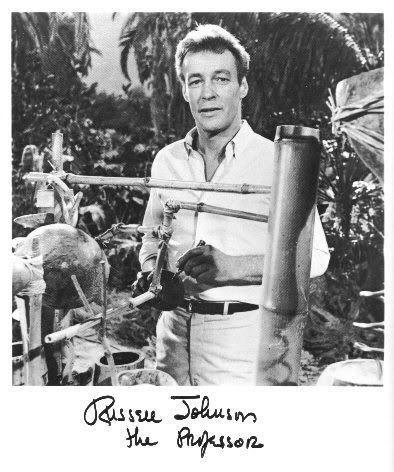
If you are like me, you can recall the Professor on Gilligan's Island pedalling his bamboo and coconut bicycle to generate the energy needed to operate his Rube Goldberg-esque laboratory. Perhaps inspired by the Professor's ingenuity, Windstream llc is currently marketing a Bicycle Generator Kit that can easily adapt to fit any standard bicycle and generate and store electricity.

How cool is this? When used with the portable power pack, a determined cyclist is able to generate sufficient energy to power a laptop or television. An entire bank of such bikes could reduce the energy costs of any gym. It has always seemed a "waste of energy" to me that the elliptical machines at my gym actually need to be plugged in in order to power the LED screen.
How it works:
The Bike Power Generator consists of a powder coated steel trainer frame holding a permanent magnet DC generator. Your bicycle (typical adult 27 inch wheel diameter) is mounted securely to this frame and the rear tire is positioned to turn the friction drum that has been custom fit over the generator shaft. The amount of electrical power that can be generated by the Bike Power Generator is determined by the energy available from pedaling the bicycle. (more info)

Leave me a comment by clicking on the link below!

Monday

Finding your nearest Farmers Market is easy - Visit: www.localharvest.org

Posted by vergelimbo On 8:47 PM

Recent food trends show that more and more people have taken an interest in eating healthy food, organic food and locally grown food. Your local Farmers' Market offers the best chance to find what you are looking for, and perhaps find or taste something new. Locating the Farmers' Market nearest to you is now only a few clicks away. Localharvest.org is a useful and straight-forward site designed to faciliate your quest. Simply enter your zip code, search "farmers market" and a map and list of your local markets will appear. Directions are just a click away.


Click the map above and see how easy it is

There are so many advantages to shopping at your local Farmers' Market- most important of which is being able to purchase a wide variety of farm fresh produce. The fruits, berries and vegetables sold at the market are locally grown and picked when perfectly ripened. This freshness enhances the flavor, texture, and aroma of the produce. Keep in mind that the fruits and vegetables at your chain grocery store are picked unripe, and on average travel over 1400 miles before appearing in your store. Farmers' Markets allow local farmers direct access to the buying public. Conversely, local consumers enjoy access to locally grown, farm-fresh produce as well as the personal interaction with the farmer who has actually grown the produce.


The Gurus Of Green, Tailgate Old School

Meeting local farmers such as Mike and Bob (seen above) can be a great and enriching experience. I met these Gurus of Green at the St. Petersburg Farmer's Market last year while I was on holiday. Because of my urban garden project and interest in good food, we compared growing tips, recipes, and they suggested places and things to see or do while I was in town. They also sold me some delicious spinach, picked earlier that morning.

Many people now consider values other than price, appearance, and accessibility while choosing what to eat. How something was grown- organic or not, pesticides or not, sustainably or not - as well as where something was grown are heavily weighted values for many. The popularity of such books as The Omnivores Dilemma and new food trends such as the locavore diet have helped to raise public consciousness about the morality and sustainabilty of current eating habits. A few years back I coined the term "ethicurean" to capture this emerging nuance:


This growing concern and thoughtful awareness has helped to restore and support smaller organic farms and popularize Farmer's Markets and community supported agriculture [CSA]

Most vendors at your local farmers' market come from small, family operated farms…as a result spending your money at such markets keeps your money within your community and supports the local economy. You can often find great bargains at a farmers' market - particularly at the end of the day, when farmers don't want to bring home boxes of unsold, ripe tomatoes or slightly limp spinach. Produce at a farmers' market is available according to the season. Adapting to eating seasonally can require a minor adjustment, but it is one which will put you in touch with the rhythms of your local seasons and with delicious fresh fruits and vegetables.

Share your local farmers market experience or comments below

Tuesday

Green Lentil Curry Soup

Posted by vergelimbo On 10:16 PM

1 lb green lentils
2 large onions
1 full bulb garlic
2 thumbs fresh ginger
1 bag baby carrots
1/4 bunch cilantro chopped
1 cup vegetable broth
1 can coconut milk
1/2 tsp cumin
salt pepper to taste


When I make soup, I usually follow the "Go Big or Go Home" Maxim. As a result, I have an unusual 2-pot technique. I simmer the lentils in a large cauldron-usually with some vegetable or chicken stock-until it is done. Simultaneously in a large frypan, I sautee all the vegetables, then add the coconut milk, stock, curry paste etc. When they are well blended, I pour these ingredients back into the massive pot, and simmer until done.
My "upsizing" has led me to start an ad hoc soup network whereby I deliver fresh soups to my friends and they, in turn, reciprocate. Another perk of making large batches is the benefit of "Aromatherapy" ... soup slowly simmering smells like home.

Friday

Cycling Away The Winter Blues

Posted by vergelimbo On 5:34 PM

In the past month the Dow Jones has fallen 3000 points, we have "lost" 45 minutes of afternoon daylight, the leaves have turned and are now falling in tandem with the temperature. October has been a bleak month no matter how you choose to measure it.
The Winter Blues will soon be upon us...

In fact, I have already been feeling the encroaching symptoms of what I personally refer to as "mung"...a variation of seasonal affective disorder [SAD] that creeps gradually into my life as the leaves change and we are robbed of precious life-sustaining sunlight. As I have been "suffering" from these Winter Blues for years, I have collected some techniques for mounting a defense.

The primary weapon for combatting The Winter Blues is Exercise ...which for me comes primarily from cycling. It is amazing how invigorating a 15-20 mile bike ride can be. To many it may seem counterintuitive that an intense cardio/physical workout can actually "give" you energy, but it is a well documented fact.

By using the technology of mapmyride.com, I have mapped a series of safe, comfortable and interesting rides (such as the one pictured below) that anyone may access by clicking here.


Andiamo 18: A low traffic, high speed scenic ride of 1 hr


Tuesday

Urban Garden Project: Composting in the City

Posted by vergelimbo On 6:25 PM

This year I had one tomato plant that yielded 52 baseball-sized tomatoes. That may sound unbelievable, but look. When I began the Urban Garden Project 3 years ago, my goal was simple: transform a patch of neglected and fallow urban land into a high-yielding garden. I chose to plant my favorite things, and also the most expensive vegetables: Organic Tomatoes, Bell Peppers, Eggplant, Tomatillos, Arugula, Beets and Melons will all put a small dent in your wallet if you buy them from your local farmer's market. If you opt to buy these vegetables at "Whole Paycheck" , you may need to consider refinancing your home.

With the economics of urban gardening in mind, I have tried to maximize the square footage yield of my garden. The highest yields per square foot include Arugula, Basil, Red Peppers and Heirloom Tomatoes. From year to year I have been fine-tuning the balance of vegetables, berries and fruit, and ever improving the quality of the soil. It is an ongoing project that saves me thousands of dollars a year, consumes a minor amount of time, and has absorbed a major amount of compost.

Compost is any organic matter allowed to biodegrade and then later added to your garden to enhance the soil's nutrients, micro-organisms and texture. Neighbors and friends have steadily contributed organic kitchen scraps, cuttings, and rotting veggie produce. The results have literally born fruit - and lots of it.

Alex and Steve: Compost Contributers to The Urban Garden

For the collection of compostible materials from neighbors and friends, I use your standard 5 gallon bucket [above] You can simply keep this in the kitchen and "feed" it kitchen scraps, much like a waste bin- but rather than being added to the mountainous accumulation of garbage we generate, it can be aggregated in a large compost pile (as I do) and later added to garden beds.

"Give and ye shall receive" is my motto when it comes to the vegetables and berries that come from the garden. Roughly 1500 square feet divided into 8 raised beds and thoughtfully planted yields far more than I can eat, so I have been supplying my hungry green friends with free vegetables like this:

Urban Garden "Horn Of Plenty" July 27, 2008

I stumbled across the Giving Garden idea when I received a delicious marinara sauce from my neighbors Steve and Alex. A few weeks earlier I had let them pick a bucket full of fresh veggies [see above] and low and behold in return I received 5 pounds of sauce which upon tasting, in a Proustian manner, I now refer to as "the marinara of my childhood".

The Marinara Sauce of Childhood

Shortly thereafter, my friend Zeke told me that if I gave her enough Blackberries I could get a delicious cobbler in return. Sadly, this cobbler was so good that I ate it all before I could take any photos! Hearing of my garden's generous bounty, Cameron "borrowed" some Golden Girl yellow tomatoes, and returned a
delicious smoky yellow tomato soup....and so on and so on...

Cameron's Roasted Chipotle Yellow Tomato Soup

Is there anything better than eating crisp vegetables, freshly made soups, sauces, gazpacho, pesto, chutneys, ratatouille, and berry cobblers? Perhaps, but only if you took the time and care to grow the ingredients yourself, and had the dishes prepared by talented friends. Thanks to everyone who helped promote and share in the idea of a Giving Garden.